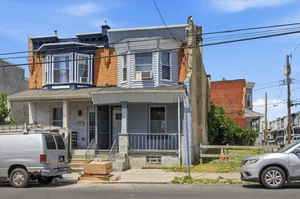
A Greater Philadelphia broker's response to J.P. Morgan's "frozen housing market" report, and why the city, the Main Line, and South Jersey are three different stories inside one metro.
By Eli Qarkaxhia | Principal, Q&U Team at Compass
Market data as of the first half of 2026 . Published June 2026.
The short version
J.P. Morgan argues the U.S. housing market is "frozen," and thawing only in the Sun Belt, with the Northeast, including Philadelphia, still iced over.
I agree on the mechanics, but not on where Philadelphia lands. Because the city is affordable, it's one of the easier Northeast markets to thaw.
The Main Line is the real freeze, driven by high prices, not by closing costs.
South Jersey is steady on price but capped by some of the highest property taxes in the country.
Bottom line: there is no single "Philadelphia market." There are dozens, and the national headline tells you almost nothing about your block.
A friend of mine at J.P. Morgan sent me a report last week. The headline: the U.S. housing market is frozen. His note was blunter. "Philly's frozen too. Your homeowners are going to need your help."
I read the whole thing, then did what I always do: I checked it against what's actually closing on the ground. He's half right. And the half he's missing is the half that actually matters, whether you own a home in this region or you're trying to buy one.
So here's my take.
What Wall Street just said
The report he sent, J.P. Morgan Private Bank's "Is the frozen housing market starting to thaw?," lays out the freeze clearly. Here's the short version, in plain English.
For years, the housing market has been "frozen." Not because people stopped wanting homes, but because the numbers stopped working. Picture a homeowner who locked in a 2.8% mortgage back in 2021. To move, they'd have to trade it for a 6%-plus loan on a pricier house. So they stay put. Multiply that one decision by a few million homeowners and you get the whole problem. Three things drove it:
Prices jumped during the pandemic and never really came back down.
Mortgage rates spiked. According to the report, the 30-year rate ran from a low near 2.7% in late 2020 to a peak above 7.6% in 2023, the fastest jump in monthly payments in a generation.
We didn't build enough homes. J.P. Morgan estimates the country has been short roughly 3 million houses, a deficit that traces back to the builders who went under after the 2008 crash.
Put it together and you get what's called the "lock-in effect." Most owners have a cheap mortgage from a few years ago. Selling means giving it up for a much more expensive one. So they don't list. No listings means no sales. The market freezes.
Then J.P. Morgan made a smarter point: the freeze isn't the same everywhere. Some cities are starting to thaw, mostly in Texas, Florida, and the rest of the Sun Belt, where it's easier to build. The cities still frozen solid are mostly in the Northeast. And on their map, that includes us, here in Philadelphia.
They're right about how the freeze works. But I think they're wrong about where Philadelphia lands. Here's why.
The one thing that decides if a market thaws
This is the part of their own report that matters most, and it's easy to miss. Whether a market thaws doesn't just come down to prices dropping. It comes down to one question: how expensive are the homes in the first place?
A cheap city can keep selling homes even when prices rise, because the monthly payment is still affordable. The report's example was McAllen, Texas, where homes cost well under $200,000, so people keep buying.
An expensive city can cut prices and still sell almost nothing, because even after the discount, the payment is still too high.
So the real question isn't "did prices fall?" It's "can a normal buyer actually afford the payment?" Hold onto that.
Philadelphia is cheap, and that's a good thing
J.P. Morgan lumps the whole Northeast into the freeze because those cities are expensive. But Philadelphia breaks the pattern. For an East Coast city, it's a bargain.
In Zillow's 2026 forecast, Philadelphia was named one of the hottest housing markets in the country, and one of the most affordable on that list. A buyer who can't swing a $750,000 home in the New York suburbs can still buy here for under $400,000. That keeps demand strong. Bright MLS, the regional multiple-listing service, has forecast home sales across the Mid-Atlantic rising close to 10% in 2026, ahead of the national pace.
And the city isn't frozen. It's balanced. Local market data puts homes selling in roughly 49 days, with about four and a half months of supply, at around 97% of asking price. That's a normal, working market.
But here's what the citywide average won't tell you: Philadelphia isn't one market. It's a thousand of them. It comes down to the neighborhood, the block, the price point, and whether the place has parking. In the right pocket at the right price, inventory is still tight, there are more buyers than homes, and we're still seeing multiple offers. The average says "balanced." The reality on certain blocks says "bring your highest and best."
One catch: it's cheap to own here, but not cheap to move. As of July 1, 2025, the City of Philadelphia's realty transfer tax is 4.578% of the sale price (a 3.578% city rate plus the 1% state rate). In the suburbs, Montgomery, Delaware, and Chester counties, the transfer tax is just 2%. So a sale inside the city carries more than double the transfer tax of one a few miles away. It's customarily split between buyer and seller, but it's a real number either way. Add agent commissions and the normal closing costs on top, and the total cost to get a deal done can run 8% or more of the price.
Here's how that fits with the prices. The low sticker price is what keeps your monthly payment affordable, and that's what drives demand. These transaction costs are a separate, one-time hit at the closing table, and they're a second reason people stay put. It's not just that owners don't want to trade a cheap mortgage for an expensive one. The move itself is costly. That adds to the freeze.
The saving grace is simple: a percentage of a smaller number is still a smaller number. A high rate on a $300,000 rowhome is easier to absorb, in actual dollars, than a lower rate on a million-dollar home. So Philadelphia's affordability edge holds. It's still cheaper to own here than in almost any big Northeast city. Just go in knowing it costs more to transact inside the city, and plan on bringing more cash to closing than you would in the suburbs.
The condo market is Philadelphia's quiet bargain
This is the part I'd put my own money on: Philadelphia condos are a bargain, and buyers are finally starting to notice.
For years, condos lagged while everyone chased rowhomes and single-family. That's changing. Luxury condos have started to move, and we've seen some big sales close at the top of the market. When you can own a finished, low-maintenance, well-located condo in a real city for a fraction of what the same lifestyle costs in New York or D.C., the value is hard to ignore. People are running that math now, and acting on it.
I think it's still early. Right now you can buy real quality at a price that doesn't make sense for how good it is. As more buyers catch on, that gap closes. That's exactly why the recent run of large luxury-condo sales doesn't surprise me. It's the smart money getting there first.
The Main Line is the real freeze, and that's the opportunity
Want to see a true freeze? Drive west to the Main Line.
Out here, the typical home sells for around $694,000, according to Redfin data from late 2025. In towns like Gladwyne, the median listing runs close to $1.8 million, and big estates reach $3 to $4 million. At those prices, the lock-in effect hits hard, and a price cut doesn't fix the math for most buyers. This is the frozen market J.P. Morgan is describing.
And on the Main Line, the cost that matters isn't the closing table. Buyers at this level can handle the transfer tax and the fees. The cost that matters is the price of admission. To get into a good home here (the right town, the right school district, move-in ready), you pay up, and you still have to compete for it. That forces every buyer to ask the real question: is this worth it? Plenty look at the number, look at today's rate, and decide it isn't. That hesitation, as much as anything, is what keeps the middle of this market frozen.
But frozen doesn't mean dead. It means split in two:
Move-in-ready homes in walkable towns or top school districts still get multiple offers and sell fast.
Homes that need work, or sit in a less convenient spot, just sit there.
The whole game is which side of that line your home lands on. In a frozen luxury market, the few homes that trade are the ones priced right, shown beautifully, and marketed straight to the buyer who wants them. That's not the market working for you. That's the agent working for you. It's the entire reason a sharp listing strategy is worth more at the top than anywhere else.
And across the river: South Jersey
A lot of Greater Philadelphia comes down to which side of a bridge you're on. So what about South Jersey?
On price, it looks a lot like the city: affordable. The median across much of South Jersey sits around $400,000, well below New Jersey as a whole (about $564,000 statewide as of late 2025). Gloucester County runs roughly $300K to $600K; Burlington County towns like Moorestown and Mount Laurel run higher. And the market has cooled into balance: more inventory than a few years ago, buyers with real leverage again, and well-priced homes in desirable towns still selling in about a month while overpriced ones sit.
But South Jersey has its own cost catch, and it's not the transfer fee. It's the property taxes. New Jersey's are among the highest in the country. A home that costs the same as one in Pennsylvania can carry close to double the annual property tax, on the order of $11,000 a year versus $6,500 on a comparable house. Remember the question that decides everything: can a buyer afford the payment? In New Jersey, the payment includes a very big tax bill. So even when the sticker looks friendly, the true monthly cost runs higher, and that's what keeps South Jersey steady instead of scorching.
One more thing changed in 2025 at the high end. Effective July 10, 2025, New Jersey moved its "mansion tax" on million-dollar-plus sales from the buyer to the seller, and replaced it with a graduated fee that climbs as high as 3.5% on the priciest homes, applied to the whole sale price, not just the part above $1 million. If you're selling luxury across the river, that's a real new line item to plan around.
What I'm telling buyers and sellers right now
Buying in the city: Your money goes further here than almost anywhere on the East Coast, which means more options. But the good blocks are still competitive, so know the neighborhoods and price points that fit you, get your financing lined up, and be ready to move when the right one shows up.
Selling in the city: It depends on your block, your price point, and whether you've got parking. In the right pocket, inventory is still tight and we're seeing multiple offers, so price it sharp and it can move fast. Just budget for the transfer tax and closing costs.
Selling on the Main Line: Condition and price are everything. Move-in-ready sells. "Needs work" waits. If you have a cheap mortgage and want to trade up, run the real monthly payment first.
Buying on the Main Line: For the homes worth having, expect to pay up and compete. Be honest with yourself about whether the premium is worth it at today's rates. If it is, be patient and precise, because the right deal still takes work.
South Jersey: Watch the property taxes, not just the price. Run the full monthly payment, taxes included, before you fall for the sticker. Sellers: price right and present well, because buyers have options again. And if you're selling over $1 million, budget for the new seller-paid transfer fee.
The bottom line
Wall Street is right that most of the country's housing market is frozen, and right that it's thawing unevenly. Here's where I'd push back: Philadelphia is one of the easiest Northeast markets to thaw, because it's affordable. The Main Line is truly frozen at the top. And South Jersey is steady, just held back by its tax load. Three very different markets, all inside one metro. That's exactly the point.
The big report tells you the weather. It doesn't tell you what to do today. On the ground, in this region, there's plenty to do.
Frequently asked questions
Is the Philadelphia housing market frozen in 2026? No. While J.P. Morgan groups the Northeast into a "frozen" category, Philadelphia proper is closer to a balanced market. Homes are selling in roughly 49 days at about 97% of asking, with healthy demand driven by the city's affordability relative to other East Coast metros.
Why does J.P. Morgan say the U.S. housing market is frozen? Because of the "lock-in effect." Most homeowners hold low pandemic-era mortgage rates and won't trade them for today's higher rates, so they don't sell. Combined with a multi-year shortage of new construction, that keeps both listings and sales unusually low.
Are Philadelphia condos a good value in 2026? In my view, yes. The condo segment lagged the broader market for years and remains comparatively cheap for big-city living, which is why luxury condo activity and several large sales have picked up recently.
Why is the Main Line market slower than the city? High absolute prices. Even when a Main Line home's price drops, the payment can still be out of reach, and buyers competing for the best homes increasingly ask whether the premium is worth it at today's rates. The friction is the price of entry, not closing costs.
How do New Jersey property taxes affect South Jersey affordability? A lot. New Jersey has among the highest property taxes in the country, often roughly double Pennsylvania's on a comparable home. Because a mortgage payment includes property tax, South Jersey's true monthly cost runs higher than the sticker price suggests, which keeps the market steady rather than hot.
Disclosure: Eli Qarkaxhia is a licensed real estate with Q&U Team at Compass Real Estate, serving Greater Philadelphia. The author has a commercial interest in the markets discussed. This article is general market commentary and is not financial, investment, legal, or real estate advice. Figures are approximate, reflect the cited sources and dates, and are subject to change. Consult your own professionals before making any real estate decision.
Sources
J.P. Morgan Private Bank, "Is the frozen housing market starting to thaw?" (privatebank.jpmorgan.com). Mortgage-rate history, the roughly 3 million-unit shortage, the McAllen example, and the Sun Belt vs. Northeast framing.
Zillow, 2026 housing-market forecast and home-value data (zillow.com).
Bright MLS, 2026 Mid-Atlantic sales forecast (brightmls.com).
Philadelphia market activity, days on market, months of supply, and sale-to-list ratio, via local MLS data (Houzeo, October 2025).
City of Philadelphia Department of Revenue, realty transfer tax rate effective July 1, 2025 (phila.gov).
Montgomery County, PA Recorder of Deeds, 2% combined county and state transfer tax (montgomerycountypa.gov).
Redfin, Main Line and Montgomery County median sale prices, late 2025 to spring 2026 (redfin.com).
RealtyTrac, Gladwyne median listing price (realtytrac.com).
South Jersey and New Jersey median prices and market conditions, late 2025 (Bright MLS, Redfin, and local brokerage reporting).
New Jersey Realtors and the NJ Division of Taxation, Realty Transfer Fee and the Graduated Percent Fee ("mansion tax") change effective July 10, 2025 (njrealtor.com; nj.gov).
Property-tax comparison (NJ vs. PA effective rates), illustrative, based on published county effective-rate data.